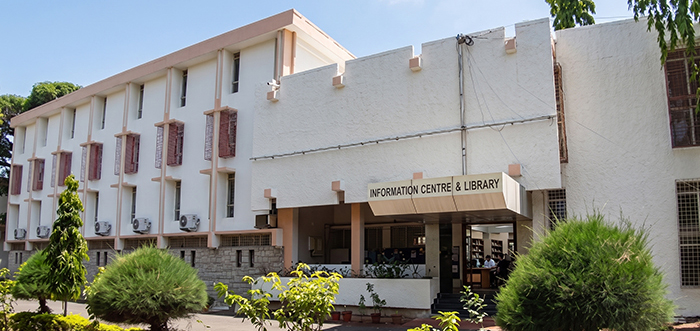
The Information Centre and Library at DIAT functions as a centralized resource hub, fulfilling the diverse information needs of students, faculty, and staff. It serves as a key partner in fostering innovation and excellence in teaching, learning, and research at the Institute. IC&L is a lively space on campus that provides a conducive environment for learning and supports the needs of information seekers. The library remains committed to its mission of ensuring DIATians have seamless access to current and relevant information by systematically identifying, acquiring, organizing, retrieving, and distributing both print and electronic resources. In addition to serving the DIAT community, the also library extends its information services to professionals, academic institutions, R&D laboratories, and industry collaborators, emphasizing its commitment to fostering knowledge sharing and collaborative engagement.
Sudipta Karmakar, Nikhil A. Bhave and D.G. Thakur. “Effect of different compression ratios and fuel injection techniques on the performance parameters of hydrogen fueled IC engine using 1D simulation technique.”
https://doi.org/10.1615/IHMTC-2025.970pSandesh S. Raut, Nikhil A. Bhave and Prashant S. Kulkarni. “Synergistic effect of polymer supported NiO/Bi2O3 nanocomposite for photocatalytic degradation of industrial wastewater.”
https://doi.org/10.1016/j.mseb.2025.118326Santosh Alone, Sushant Satputaley, Dilip Borkar, Nikhil Bhave and Magdalena Dudek. “Ethanol–Hydrogen reactivity management for high-efficiency, low-emission RCCI engines: A systematic review of combustion, control, and life cycle impact.”
https://doi.org/10.3390/en19040909Kapil T. Patil et al. “Azimuth orientation effects on a fixed pentagonal-pyramid solar still in tropical conditions, Nagpur, India.”
https://doi.org/10.1016/j.seja.2026.100131Kapil T. Patil et al. “Investigation of geometry-induced heat and mass transfer mechanisms in square, pentagonal, and hexagonal pyramid solar stills.”
https://doi.org/10.1016/j.ecmx.2026.101779Kapil T. Patil et al. “CFD-based geometry–enhancement interaction framework for pyramid solar stills using PCM-based thermal regulation.”
https://doi.org/10.1016/j.desal.2026.120109Yogesh Kumar et al. “Rational design of bimetallic and trimetallic UiO-66 based metal-organic frameworks towards efficient hydrolysis of toxic chemicals.”
https://doi.org/10.1016/j.micromeso.2026.114048Shreyas Jain, Harshit Kumar Sharma and Appala Venkata Ramana Murthy. “Machine learning–enhanced UWOC system for robust underwater communication with FEC integration.”
https://doi.org/10.47852/bonviewJOPR62028116Neelkamal Sharma and Upasna Singh. “Tiny poison, big effect: comprehensive multi-vector poisoning assessment of small language models.”
https://doi.org/10.1109/I5CPS67958.2026.11452345Vivek Saxena, Upasna Singh and L.K. Sinha. “Effect of various feature engineering techniques and hyper-parameters tuning of machine learning approaches for landslide susceptibility map generation.”
https://doi.org/10.1007/s12524-025-02190-3Ambuj Saxena et al. “Synergistic microstructural evolution and mechanical response in B4C-reinforced dissimilar friction stir welded AA7020-T651/AA5083-H111.”
https://doi.org/10.1007/s11665-026-13927-7Gaurav Sharma et al. “Structural vibration damping using epoxy–glycidyl polyurethane thermoset blend: a combined experimental and analytical approach.”
https://doi.org/10.1007/s42417-026-02593-7C. Krishnamurthy, S.C. Hosamani, Vijay D Pattar and Satishkumar Naikar. “A Scientometric analysis of research productivity of Karnatak University, Dharwad.”
https://doi.org/10.14429/djlit.20835The Information Centre and Library at DIAT functions as a centralized resource hub, fulfilling the diverse information needs of students, faculty, and staff. It serves as a key partner in fostering innovation and excellence in teaching, learning, and research at the Institute. IC&L is a lively space on campus that provides a conducive environment for learning and supports the needs of information seekers. The library remains committed to its mission of ensuring DIATians have seamless access to current and relevant information by systematically identifying, acquiring, organizing, retrieving, and distributing both print and electronic resources. In addition to serving the DIAT community, the also library extends its information services to professionals, academic institutions, R&D laboratories, and industry collaborators, emphasizing its commitment to fostering knowledge sharing and collaborative engagement.
The library offers a rich array of learning resources in both print and digital formats. It has built an extensive collection that includes books, theses and dissertations, reports, bound volumes of journals, standards, monographs, and more.
In addition to its impressive print holdings, the library provides access to a wide range of electronic resources to support teaching and research. Subscriptions include a core selection of full-text electronic journals, databases, e-books, and other materials focused on academic disciplines and defence science and technology. All electronic resources are accessible from any networked computer or laptop within the Institute campus.
To meet the diverse informational needs of its user community, the library offers a wide range of services, including: Reference Services, Document Lending Services, Information Alert Services, (such as: List of new arrivals, display of faculty publications, Information on upcoming conferences and national/international events, Employment opportunities and prospectuses of foreign universities), Newspaper Clipping Service, Information Literacy and User Awareness Programs etc. These services are designed to enhance user engagement and support academic and research activities across the DIAT community.
To ensure speedy and effective service, the library has fully integrated RFID technology with LIBSYS 10, a multi-user, web-centric library management system. Alongside a well-equipped computer lab with high-speed internet, the library provides authenticated and secure Wi-Fi access to its users.
To facilitate immediate access to the Institute’s research and academic output on the campus LAN, the library has developed a digital institutional repository using DSpace, an open-source repository software. This repository now contains over 1,000 documents, including faculty research publications, conference proceedings, theses, dissertations, course curricula, question banks, news articles, annual reports, and more—readily accessible to all.
The library staff is highly qualified and trained to efficiently gather, store, process, and retrieve information, utilizing the latest technological tools to meet user demands.
The goal of resource sharing (inter-library loan) is to enable libraries to meet user demands more effectively while optimizing the use of limited resources. The library maintains strong collaborations with all DRDO TICs as well as prominent academic and research institutions, including the University of Pune (UoP), National Chemical Laboratory (NCL), IISER, IITs, CMET, and others.
“To be a cutting-edge, world-class Information Resource Centre in Advanced and Futuristic Technologies, fostering innovation, indigenous research, and self-reliance to strengthen national security.”
The Information Centre and Library is dedicated to facilitating new knowledge through the following core missions:
|
Name
|
Designation
|
Department
|
|---|---|---|
|
Dr. Shaibal Banerjee, Professor
|
Chairman
|
School of Defence Technology & Management
|
|
Dr. Chetan J. Bhongale, Asso. Professor
|
Dr. Shaibal Banerjee, Professor
|
Applied Chemistry, Energy and Environment
|
|
Dr. Vijay Hiwarkar, Asso. Professor
|
Member
|
Metallurgical & Materials Engineering
|
|
Dr. Deepti Vidhyarthi, Asst. Professor
|
Member
|
Computer Science and Engineering
|
|
Dr. A.V.R. Murthy, Asst. Professor
|
Member
|
Applied Physics
|
|
Dr. Pankaj M. Nadge, Asst. Professor
|
Member
|
Mechanical Engineering
|
|
Dr. Kanaka Raju, Asst. Professor
|
Member
|
School of Quantum Technology
|
|
Dr. Rajesh Kumar, Asst. Professor
|
Member
|
Electronics Engineering
|
|
Dr. Hari Om Varma, Asst. Professor
|
Member
|
Aerospace Engineering and Autonomous system
|
|
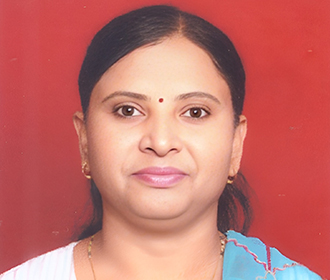
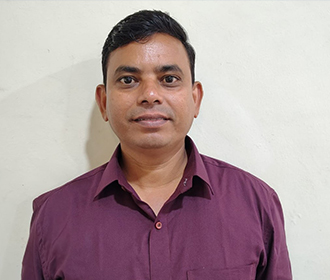
Dr. Vijay Pattar, University Librarian (I/C)
|
Member Secretary
|
Information Centre and Library
|

|
Name
|
Designation
|
Department
|
|---|---|---|
|
Working Days
|
09:00 AM – 06:30 PM
|
09:00 AM – 06:30 PM
|
|
Saturdays
|
10:00 AM – 05:00 PM
|
10:00 AM – 05:00 PM
|
|
Sundays & Holidays
|
Closed
|
|
All Institute students, faculty members, and staff are eligible for membership. Book limits and loan periods by category:
|
Category
|
No. of Books
|
Loan Period (Days)
|
|---|---|---|
|
Faculty
|
15
|
90
|
|
Ph.D. Students
|
15
|
15
|
|
M.Tech Students
|
10
|
15
|
|
JRF
|
2
|
15
|
|
Other
|
1
|
15
|
R is a free software environment for statistical computing and graphics. It compiles and runs on a wide variety of UNIX platforms, Windows and MacOS.
JASP (which stands for Jeffreys’s Amazing Statistics Program) is a free, open-source, and cross-platform statistical software designed as a user-friendly alternative to commercial software like IBM SPSS.
PSPP is a free, open-source software application for basic statistical analyses. It is designed to function like SPSS (Statistics Package for the Social Sciences), a widely used software application for scientists and researchers who conduct statistical analyses.
QualCoder is a free, open-source Qualitative Data Analysis (QDA) application written in Python (PyQt)
Taguette (pronounced tag-it) is a popular free, open-source Qualitative Data Analysis (QDA) software designed for coding and analyzing text-based research materials.
LimeSurvey is a premier open-source online survey application. It is widely used by academic institutions, research teams, government bodies, and businesses looking for a self-hosted or cloud-managed alternative to proprietary tools like Qualtrics, SurveyMonkey, or Typeform.
SurveyPlanet is an online survey tool that helps you build, share, and review forms. You can use their free plan for unlimited surveys, questions, and responses.
Please visit your new e-Library at: https://diat.knimbus.com/
You can also download the Knimbus m-Library App from the Google Play Store or Apple App Store for convenient access through your mobile devices.
We encourage all faculty members, researchers, scholars, and students to make full use of this new digital library facility.