The Department came into existence as Faculty of Applied Physics in 1952 and was renamed as Department of Applied Physics in 1979. We offer two M. Tech. programmes namely, Laser & Electro-Optics and Sensors Technology. Also, we offer M.Sc. in Applied Physics (Photonics) and M.Sc. (Tech.) in Photonics. We have a very strong Ph.D. programme in Photonics, Lasers, Sensors, Advanced Functional Materials for Sensors, Photonics, and interdisciplinary applications in fields of healthcare, defense, and communication. We aim to train students for their career in academia as well as industry in the frontier areas of Science & Technology. All our Masters and Ph.D. Programmes are a balance of fundamental science and advanced technology helping them to pursue career opportunities in Academia, Research & Industry.
To be a Centre of Excellence of international repute for education, training and research in Advanced Sensor Technology, Photonics and Laser & Electro-optics with a view to strengthen National Security and Self Reliance.
To impart higher education and training in various fields of Science and Technology having a bearing on the defence requirement in general and advanced Sensors, Photonics and Laser & Electro-optics in particular for the officers of the Ministry of Defence, Armed Forces, Public Sector Undertakings, Private Sectors, Industries, other related Organizations and general public.
To carry out Research, Design and Development activities with a view to maintain adequate standards required for the above.
To strive for continuous learning, innovation, entrepreneurship and quality research culture amongst the student community through effective government industry and academia collaboration.
To encourage ethics, teamwork and technological leadership skills amongst students to solve complex engineering research problems collaboratively by imparting a strong theoretical foundation complemented with extensive practical training.
To carry out multidisciplinary collaborative research in the frontier areas of science and technology.
To enroll or for any general information, please contact us:
Email: hod_ap@diat.ac.in
Address: Department of Applied Physics, Technical Area, Defence Institue of Advanced Technology (D.U.), Pune
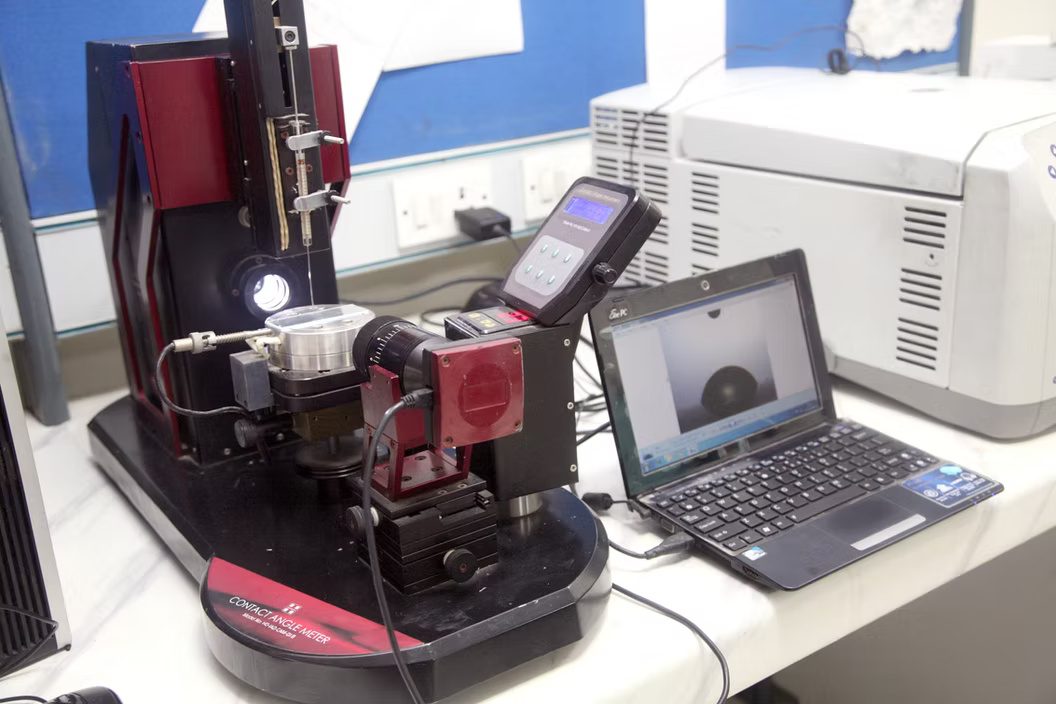
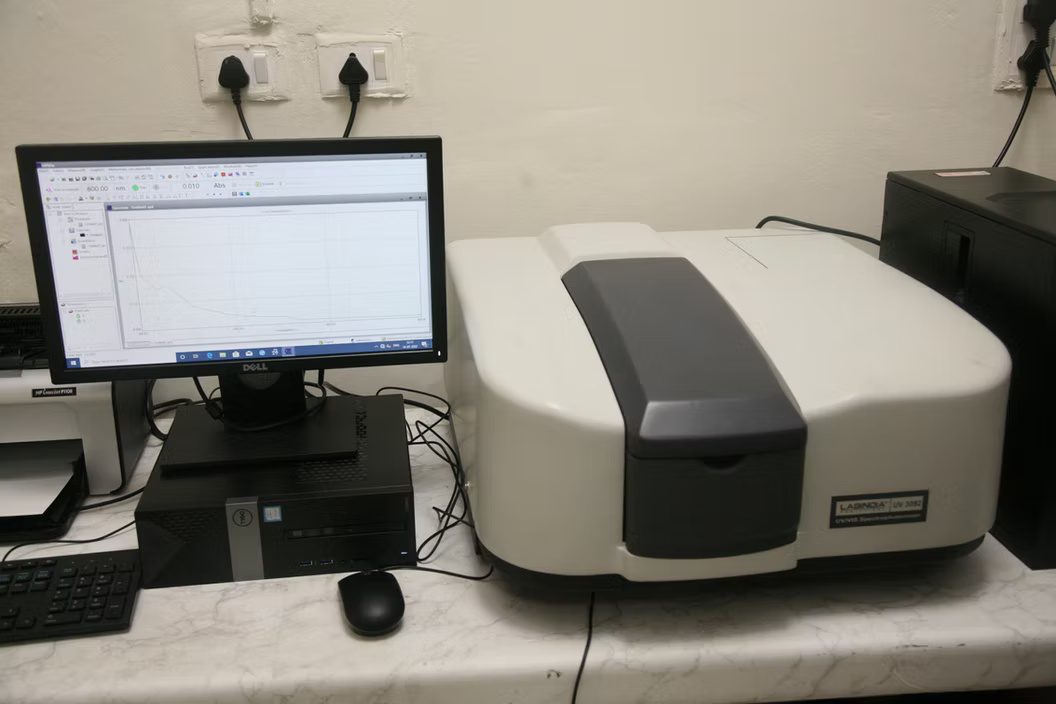
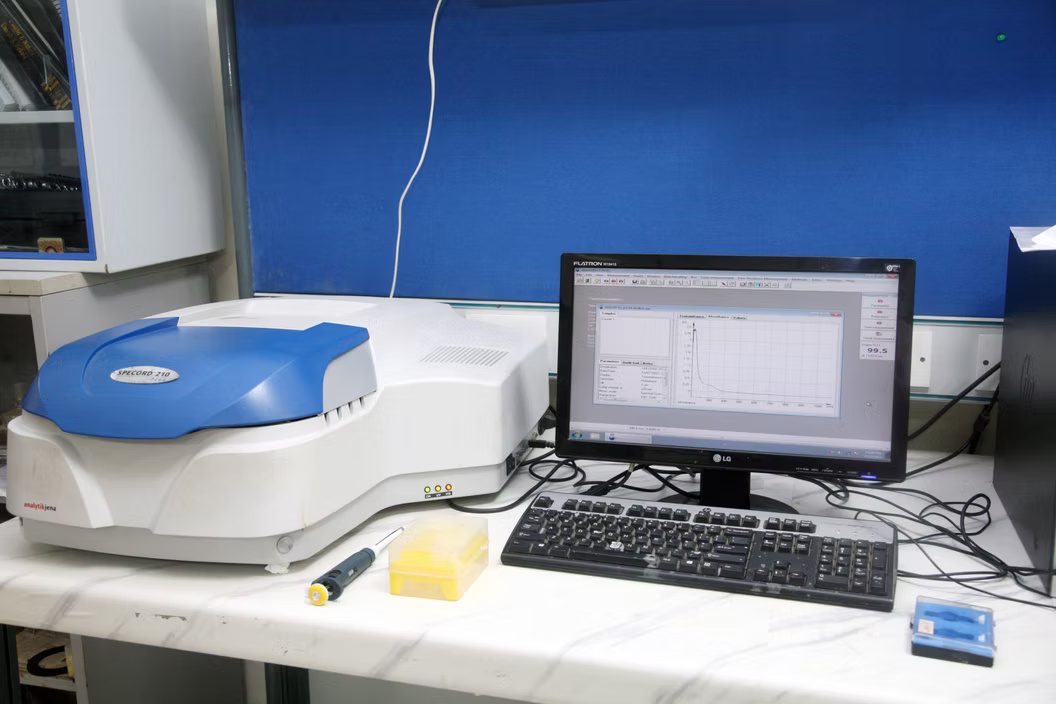
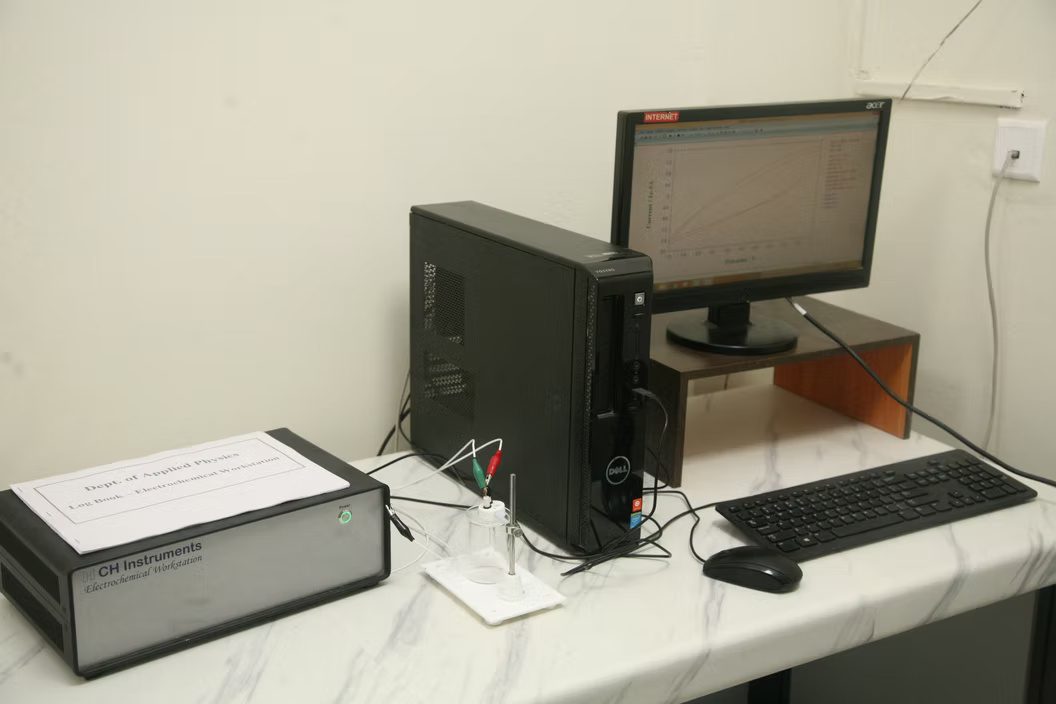
The department works on research in Nanotechnology, Laser and Photonics, Material Science, Sensors Technology, and Renewable Energy, and interdisciplinary areas.
Semiconductor Lasers
Quantum Cascade Lasers
Ultrafast Fiber lasers
THz TDS and imaging
FSOC
Under water Communication
2D materials
EMI shielding and stealth materials
Micro fluidics
Solar photovoltaics
Materials for Sensors
Materials for healthcare
Fiber Optic Sensors
Optical sensors
Metamaterials Sensors
Metal Oxide Sensors
Frequency Based Sensors
E-Nose for disease diagnosis
Nano-bio sensors
Intrusion detection
Sensors for machine/structural health monitoring
The department of Applied Physics offers Ph.D program in various research fields and will be advertised time-to-time in the website. We will admit students by national fellowships like CSIR,UGC-JRF or other equivalent national level exams and also through various means like institutional fellowship for GATE and NET qualified students. We also cater MoD sponsored candidates. Ph.D students who joined department will undergo course work for first six months and followed by a comprehensive exam at end of his first year. Clearing this confirms his registration for Ph.D program and he will continue to carry his research work in his respective field. After a satisfactory periodical reviews he/she will propose his work for thesis submission will be evaluated by a panel of examiners. Finally, after successful completion of his a open defense he will be awarded a Ph.D degree.
The department of Applied Physics offers Masters of Technology (M.Tech.) in three branch. The M. Tech. programme is of four-semester duration. In each of the first two semesters there are five courses and practical. There will be three continuous evaluation examinations and a final semester examination for every course. Half-yearly evaluation of the project takes place at the end of the third semester. At the end of the final semester the student submits a thesis and makes a presentation about the project, which is evaluated by the Internal and External examiners. Course syllabus has been updated periodically to keep pace with the contemporary technological advancement.
Sensors is one area of science and technology which has witnessed a paradigmshift from conventional bulky components to extremely miniaturized and smart devices. The technological advancements in the area of Electronics, Electrical engineering, along with the advancements in basic sciences in the areas of microfluidics, nanotechnology, biotechnology and photonics have been responsible for this concomitant growth inthe development of current sensors. An interdisciplinary approach which will involve materials engineering, electronics and electrical engineering along with a flavor of chemical engineering and bio-engineering, is now required to understand such sensors. The objective is to make them faster, smaller, smarter and selective. This domain has, hence, seen large number of Industries, Institutes and small entrepreneur companies coming up in recent times. The programme intends to educate and train bright fresh students in the field of sensor technology to carry out challenging responsibilities in their future career, and meet the current challenges and foster the opportunities which the globe has to offer. This is an interdisciplinary course concerning broadly Electronics, Instrumentation, Sensors, Optics, Electromagnetism, Nanotechnology and Advanced Materials.
One of the greatest scientific discoveries of the twentieth century that has led to technological advancement touching all aspects of human life is the LASER. Applications of lasers range from medical applications, communications, and industrial applications to military applications. An understanding of laser technology is essential for an engineer working in many of the present-day cutting-edge technologies. The aim of this program is to train the students in the field of lasers, fiber optics, electro-optics, and photonics that would enable them to meet the challenges in this rapidly developing field.

One of the greatest scientific discoveries of the twentieth century that has led to technological advancement touching all aspects of human life is the LASER. Applications of lasers range from medical applications, communications, and industrial applications to military applications. An understanding of laser technology is essential for an engineer working in many of the present-day cutting-edge technologies.

Department of Applied Physics at DIAT has excellent faculty and research expertise in the specific areas related to photonics like nano-photonics, ultra-fast photonics, bio-photonics, semiconductor optoelectronics and photonics devices, fiber optics, optical sensors, etc. To extend this expertise to the younger generations department has initiated two flagship programs i.e. M.Sc Applied Physics (Photonics) and M.Sc. (Tech.) in photonics. The aim of these programs is to train the students in the field of lasers, fiber optics, electro-optics, and photonics which would enable them to meet the challenges in this rapidly developing field
The M.Sc. program is a 02 years program equivalent to any M.Sc. program elsewhere. However, there is a very good emphasis on practical exposure in various specialized areas as mentioned above through full-length laboratory courses. This program also allows students to work in research laboratories from day 1. A full semester is dedicated to doing the project without any additional coursework. This enables students to incline toward both research and gaining practical knowledge and makes them industry-ready.
M.Sc. (Tech.) in Photonics is a three-year course more oriented toward research. During the 4th semester, M.Sc. Tech students will be offered specialized electives along with mini-projects. Also, there is one full year (2 semesters) i.e., the third year is completely dedicated to project work without any additional coursework