Department of Applied Chemistry, Energy and Environment

About Us

The Department of Applied Chemistry, Energy and Environment (ACE&E) has been formed at DIAT Pune by combining the oldest department, i.e., Department of Applied Chemistry with the emerging School of Energy and Environmental Systems to address modern technological challenges of the Nation in the fields of clean energy, sustainability, and environment. By integrating interdisciplinary applied research combined with innovative teaching, and real-world applications to Defence and other industry sectors, the Department aims to produce skilled professionals and state-of-the-art solutions to current and future global challenges.

Our academic programs are designed to provide students with a sound foundation in applied chemistry and renewable energy, at the same time training them in applications to new and emerging technologies such as nanoscience, modern energy systems, and industrial chemistry. The department actively promotes collaboration with industry, government agencies, and international institutions to foster impactful research and community engagement both at fundamental and application level.

Vision

To be a Center of Excellence in Energy & Chemical Sciences catering to Sustainable Development.

Mission

To provide high-quality education and training in fundamental and applied frontiers of chemical sciences and energy

  • To conduct cutting-edge, interdisciplinary research to address global and defence challenges
  • To cultivate a collaborative learning ecosystem that bridges the gap between academia and industry for creation of skilled human resource

Get In Touch

To enroll or for any general information, please contact us:

 Email: hod_acee@diat.ac.in

Address: 2nd Floor, Main Building, Defence Institute of Advanced Technology, Girinagar, Pune, Maharashtra, India 411025

Thrust Areas of Research

Specialization-Applied Chemistry

Ionic Liquids, Membrane separation, High Energy Materials, Organic Synthesis, Organic Hybrid Nanomaterials, Nanocomposites, Catalysis, Biomaterials Characterization, Biomimecity, Hydrogels, Sol-Gel Synthesis, Mesoporous Materials.

Specialization-Energy & Environment

Hydrogen generation and combustion, Biofuels, Fuel Cell, Hydrogen Energy Storage, Wastewater Treatment, CO2 sequestration Solar thermal applications-Photovoltaics, Desalination, Energy Management, Solar Energy, Hydrogen storage and refuelling, Thermal management, Hybrid Energy Systems, CFD and Heat Transfer, AI & optimization, Sustainability.

Research Laboratories

  • Organic Synthesis Laboratory
  • Advanced Chemical Technology Laboratory
  • Nanochemistry and Quantum Dots Lab
  • Energy and Environment Laboratory
  • Liquid and Gas Combustion Laboratory
  • Instrumentation Laboratory
  • Fuel Cell and Electrolyser Laboratory
  • Simultaneous Thermal Analysis
  • Energy Systems Simulation Lab
  • Hazardous Waste Management Lab
  • PLIF and Combustion Diagnostic Lab

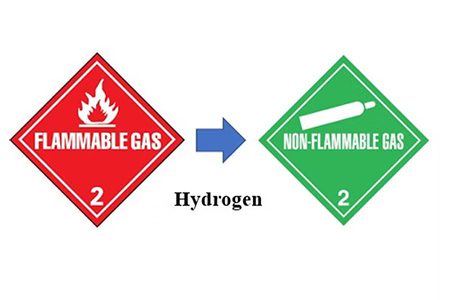
Development of Safe Hydrogen

  • The world’s energy demand is continuously increasing, and conventional energy sources are limited, non-renewable and create large amounts of pollutants. Due to the reduction of fossil fuels and pollution concerns, renewable and clean energy sources are required. Hydrogen gas is considered a promising energy carrier due to its pollution-free combustion and easy production. However, there are safety concerns regarding the handling and storage of hydrogen, such as its tendency to leak during storage due to its low molecular size, embrittlement of metals, high flammability and explosive range, and low ignition energy. Hydrogen burns with a nearly invisible flame, making it difficult to prevent and poses significant safety hazards. As a result, the investigation aims to suppress or inhibit hydrogen flames by adding suppressors to improve the safety of hydrogen technology. The inhibited hydrogen could be useful in reducing current hydrogen safety challenges and expanding the use of hydrogen in various applications, such as fuel transportation, industrial use, and onboard fire prevention and safety.

Energy Storage Materials

  • Energy storage materials play a crucial role in addressing the energy and environmental challenges of the present time. These materials enable the integration of renewable energy sources into the grid, allowing excess energy to be stored and used when needed. This helps to reduce our reliance on fossil fuels, lower greenhouse gas emissions, and mitigate the impacts of climate change. However, the manufacturing, use, and disposal of energy storage materials also have environmental impacts, and their lifecycle analysis must be considered. Therefore, the development of energy storage materials based on thermal energy that is not only efficient but also sustainable and environmentally friendly is a critical area of research and development.

Photocatalysis for green hydrogen generation

  • Photocatalysis is a promising technology for the green generation of hydrogen, which has significant potential as a clean energy carrier. Photocatalysis involves the use of a catalyst and light to drive chemical reactions that produce hydrogen from water. This process is renewable and sustainable, and it produces no greenhouse gas emissions or other harmful pollutants. In addition to its energy benefits, photocatalysis can also help to address environmental challenges such as water scarcity and pollution, as it can use wastewater as a source of hydrogen production. While there are still some challenges to be overcome in terms of scaling up and optimizing photocatalysis for commercial use, it holds great promise as a green and sustainable solution for hydrogen generation.

Preparation and Applications of green solvents

  • Ionic liquids are typical green solvent that has gained attention in recent years due to their unique properties and potential applications in the energy and environmental fields. They are non-volatile, non-flammable, and have negligible vapor pressure, making them more environmentally friendly than traditional organic solvents. Ionic liquids have been studied for their potential in energy storage and conversion, as well as in the removal of pollutants from air and water. They can also be used in the development of new materials, such as supercapacitors and solar cells. Overall, this research has the potential to contribute to the development of sustainable energy and environmental solutions.

Separation of Carbon dioxide

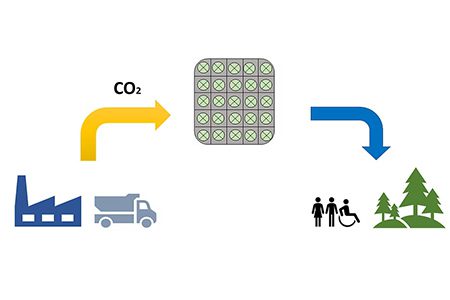
  • Separation of CO2 is an important process in mitigating the effects of greenhouse gas emissions on the environment. However, the process of separating CO2 can be energy-intensive and therefore contribute to carbon emissions if not done in a sustainable manner. There are various technologies available for CO2 separation, including absorption, adsorption, and membrane separation, each with its own energy requirements and environmental impacts. The choice of technology and the energy source used to power the separation process can greatly affect the overall environmental impact of CO2 separation. Therefore, careful consideration of energy and environmental factors is necessary when implementing CO2 separation technologies and the research is focused on the same.

Membranes for Wastewater Treartment

  • Membrane technology has emerged as a promising approach for wastewater treatment due to its ability to remove a wide range of contaminants while consuming less energy than traditional treatment methods. Membrane-based wastewater treatment systems can operate at low pressures, reducing energy consumption and associated carbon emissions. However, the production of membranes and their disposal at the end of their life cycle can have environmental impacts, particularly if they are not properly managed. The choice of membrane material can also impact the energy and environmental footprint of the treatment process. Therefore, a holistic evaluation of the energy and environmental impacts of membrane-based wastewater treatment systems is necessary for sustainable implementation.

Reclamation of Precious Metals

  • Efficient reclamation of precious metals, particularly lithium or tungsten or titanium, from end-of-life products and waste streams is important for both environmental and economic reasons. Lithium is a key component of rechargeable batteries used in electric vehicles and renewable energy storage systems. The reclamation of lithium from waste streams can reduce the reliance on virgin materials and reduce the carbon footprint associated with their extraction and production. However, the energy required for the reclamation process and the potential environmental impacts associated with the treatment of waste streams need to be carefully considered to ensure the overall sustainability of the process. Therefore, the development of efficient and environmentally friendly reclamation technologies is crucial for the future of lithium and other precious metals.

Gas Recovery from Methane Hydrates

  • To tackle the ever-increasing need of energy in the world, it is important to continuously identify new energy sources. Methane hydrates are ice like crystalline compounds primarily located in seabed and permafrost regions. Due to high amount of natural gas trapped within crystals of these hydrates, they pose as a promising energy resource. The major challenge lies in the recovery of methane gas from the hydrates. Release of methane gas from hydrate require disturbing the methane hydrate equilibrium state either by depressurization or by thermal stimulation.  Microwave heating has proved to increase the gas recovery from the hydrates, however, research and development in this area is quite prominent before qualifying for a pilot trial. Continuous recovery of methane from hydrates leads to stability problems with the seabed, which can be catastrophic in nature leading to major earthquakes or Tsunami. Therefore, it is also important to have a good assessment of sustainability of any hydrate reservoir.  New innovations are needed and are important to be successfully able to dissociate the hydrate and manage the methane gas for energy usage

Hydrogen Fueling and Storage

  • Hydrogen is becoming the center of attraction for the modern-day automotive systems, particularly due to its easy availability and versatility.  At the center of all the development in line with hydrogen economy lies the fueling and storage of hydrogen. Much of the research is needed in direction of how to replace the traditional gas/liquid fuel filling stations by hydrogen fueling stations. The challenges exist for making the fueling experience for consumers as easy as it is with traditional fuels. Furthermore, the thermodynamics of filling process, and physical and chemical nature of hydrogen put certain restriction on hydrogen filling. Society of Automotive Engineers (SAE) has led down certain norms for safe hydrogen filling through these stations. However, for practical and economical purposes and for optimized filling experience, much research is needed in effectively adapting and analyzing these norms for local conditions. The storage of hydrogen also proposes certain challenges in terms of hydrogen embrittlement, storage space, thermodynamic and physical conditions, and usability of hydrogen as fuel.

Bio-Diesel in Combustion Engines

  • Fossil fuels are going to be exhausted in near future. A suitable fuel alternative for transportation and mobility industry is a need of the time. Non-edible oils are present in abundance and can be used as a fuel in combustion engines after processing. Pongamia Pinnata is bio-diesel produced through the transesterification process. This bio-diesel is a good quality fuel which has superior calorific value, lower density and viscosity and combustion properties. They produce less environmental pollution and contribute to energy security and safety of country.

Automobile Sector Focused on Battery/Hybrid Electric Vehicles

  • The global automobile sector has two major challenges. One is to comply stringent EURO 6/ BS 6 norms necessary for environmental protection. The other is to reduce dependency on fossil fuels to improve combustion and performance. Thus, the challenges related to fuel cell development, li-ion battery management system, charging, discharging and commercialization related to e-automobiles has become an upcoming area to focus upon. The energy aspect of batteries and cells are being widely studied. Research and development related to hydrogen-based fuel cell technology is also in pipeline

Academic Programs

  • Doctor of Philosophy (PhD)
  •  Master of Science (MSc) in Applied Chemistry
  •  Master of Technology (MTech) in Renewable Energy
  •  Master of Technology (MTech) in Nano Science & Technology

Eligibility

For MSc: BSc in Chemistry/Chemical Scienes or relevant area

For MTech: BE/B.Tech. in Energy/Mechanical/Chemical/Civil/Environmental/any relevant discipline of Science and Engineering or Full-time M.Sc. in all branches of Chemistry & Physics

All the above programs are offered under GATE/self sponsored/Industry Sponsored/DRDO sponsored/MoD sponsored categories.

PhD (Specialization- Applied Chemistry): Full-time M.Sc. in all branches of Chemistry with valid GATE/NET/National level qualifying score as applicable

PhD (Specialization- Energy & Environment): MSc. in any relevant branch OR ME/MTech in Energy/Mechanical/Chemical/Civil/Environmental/any relevant discipline of Engineering with valid GATE/NET/National level qualifying score as applicable

Career Opportunities

Scientific positions at DRDO, ISRO, DAE and CSIR labs in India, and abroad. PSUs like NTPC, BHEL, HAL, IOCL, HPCL etc., regularly recruit professionals from both chemical sciences and Energy background. Demands in Private sector companies like Tata Chemicals, Adani Transmission, JSW Energy, TATA Power etc., are also high. In addition to this, career options as Energy Manager in industries and certified auditor through Bureau of Energy Efficiency also available for Energy professionals.

(Dr.) Prashant S. Kulkarni

(Dr.) Prashant S. Kulkarni

Professor, Head of the Department
Research Interests: Development of Safe Hydrogen, Photocatalysis and applications, Energy Storage/Phase Change Materials, Green Solvents/Ionic Liquids, Bipropellant rocket fuels, Adsorption of Heavy metals/ organics, Wastewater treatment & Photocatalysis

Prof. Pawan K. Khanna

Prof. Pawan K. Khanna

Sr Professor, Dean Student Affairs
Research Interests: Nanomaterials/Quantum dots, Nano-chemistry, Organometallic chemistry, Photonics and Bio-nanotechnology, Nano-particles of metals and their chalcogenides
Prof. Shaibal Banerjee

Prof. Shaibal Banerjee

Professor
Research Interests: Organic Synthesis, Organic Plasticizers, Nano-Energetic Materials, Metal Organic Frameworks, High Energy Molecules for Defence Applications
Dr. Chetan J. Bhongale

Dr. Chetan J. Bhongale

Assistant Professor
Research Interests: Organic and hybrid nanomaterials, Nanoparticles and nanocrystals synthesis, Self-assembly and Biomimecity, Biomineralization, Polymer nanocomposites, Fuel Cells
Dr. Nikhil A Bhave

Dr. Nikhil A Bhave

Assistant Professor
Research Interests: Energy and Sustainability, Bio-fuels and Bio-diesel, Combustion Engines, Solar Energy Utilization
Dr. Rahul Yadav

Dr. Rahul Yadav

Assistant Professor
Research Interests: CFD & Heat Transfer, Hybrid Energy Systems , Hydrogen fueling and storage, AI and Optimization,Thermal Management
Dr. Prasad Joshi

Dr. Prasad Joshi

Scientific Officer
PhD-DIAT Pune, Silver selenide (Ag2Se) nanoparticles Synthesis Nanoparticles for EMI Shielding

Shubham Das

Student

Atul H Arware

Student

Vibhu Kumari Princi

Student

Tanaya Gawhale

Student

Vaishnavi Gujjalwar

Student

Suhani Kelapure

Student